A Small Buck, a Wet Morning and a Fresh Access Route
One of the most interesting stories from Episode 183 came from a wet Sunday morning at a treeline stand the guys call the middle. The hunter walked the edge before cutting into the timber, and a young buck later came through and started paying close attention to that same route. It looked like he had picked up the ground scent from the walk in.
The buck stopped, investigated and repeatedly returned to the path. The hunter believed it was following his ground scent. When the buck reached the point where the access route turned into the timber, it paused, looked around and appeared to search for the source.
The Buck Used More Than Its Nose
The buck came within about 10 yards and looked toward the hunter, who was trying to stay still and concealed. It then backed away and moved off, before taking a wider route that brought it around toward the downwind side of the stand.
The encounter illustrates why scent, sight and movement all matter. The hunter could observe the buck’s head movements and travel path, but could not know exactly what it was thinking. The most useful lesson is the sequence: investigation of an access route, visual suspicion, withdrawal and a downwind check.
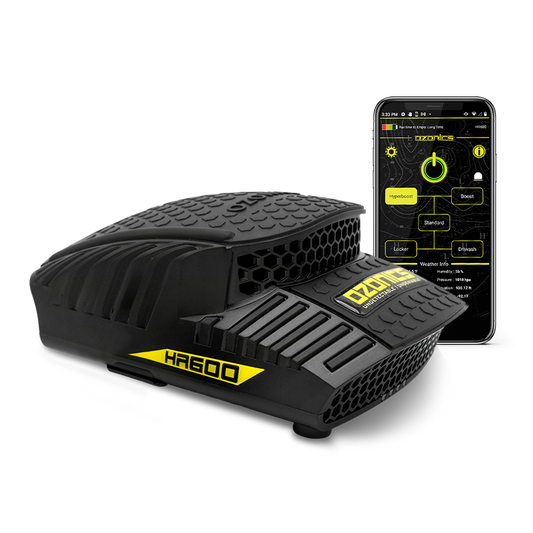
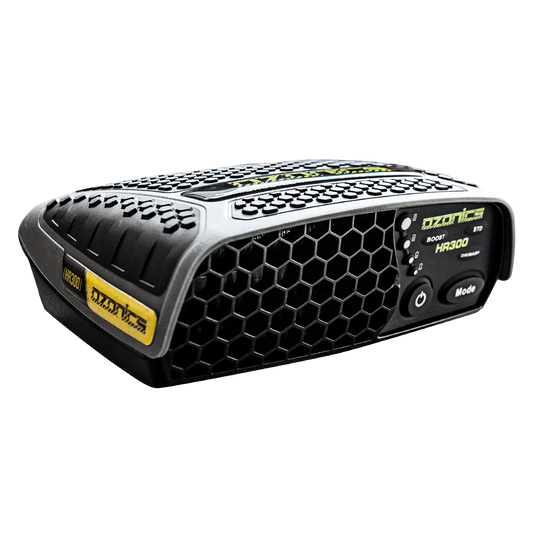
Here’s where the encounter got especially interesting. An Ozonics HR unit was running and positioned toward the downwind side. The buck moved around, lifted his nose and investigated, but never blew. Eventually, he walked off. That’s what happened—not proof of exactly why he reacted that way, but a real moment in the stand worth talking about.
Nick and Cole didn’t describe it as some perfect, controlled test. A buck can react to sight, sound, ground scent, airborne odor or a combination of things. You can’t know what was going through his head. What you can do is pay attention to the sequence and learn from it.
That is an authentic firsthand observation, not a controlled test. The buck’s behavior cannot establish how much ozone influenced the outcome, nor can it guarantee that another deer would react the same way. It is still a useful story about why Nick and Cole pay close attention to wind direction and how deer respond near the stand.
Ground Scent and Airborne Scent Are Different Problems
The buck’s initial investigation appeared to follow the hunter’s path on the ground, while its later downwind circle created a different kind of encounter. Those are distinct situations. A hunter can minimize unnecessary contact with travel routes by planning access, while airborne odor management depends on current wind, setup and conditions.
That’s why the guys still talk so much about wind, access and concealment. An Ozonics unit is part of their setup, but it doesn’t mean the rest of the hunt stops mattering.
The Takeaway
The buck never gave the dramatic alarm response the hunter feared, but it did show suspicion and eventually leave. The practical lesson is to read the entire encounter rather than reducing it to “spooked” or “not spooked”—and to remember that one observation is not proof of a product’s effectiveness.
Frequently Asked Questions
Did Ozonics prevent the buck from blowing?
The hunter observed that the buck did not blow while his Ozonics unit was operating. The episode does not establish that the unit caused that response.
Why did the buck circle downwind?
The guys thought the buck might have been trying to confirm what he was sensing by circling around. That’s a reasonable interpretation of the encounter, but nobody can know his exact motivation.
Source: Killerwinds Podcast, Episode 183
Listen to the Full Conversation
This article was developed from a discussion on the Killerwinds Podcast, where the Ozonics team explores scent management, ozone technology, and the practical application of Ozonics in the field. Watch or listen to the full conversation for a deeper understanding of the technology, its intended use, and the experiences behind it.
Watch the Full Killerwinds Podcast Episode